Yes, I’m still on art and Paris mode, and no, I’m not sorry. (Except maybe to those folks whose ears I’ve yakked off with my travel tales — to me, those experiences are still so fresh in my mind, and to be honest, I’d kind of like to keep it that way as long as possible. Until the next trip, that is.)
You would think that given the above, I’d have made a lot more progress on my Monet novel. Things went a little topsy turvy with day job twists and turns at the tail and of, and since, my visit to Paris, which initially limited writing progress. But now that things have settled down (how is it already July??), I’m ready for longer, more productive sessions. Not even discovering a surprise, potential plot issue has dampened my spirits. In fact, it’s actually energized me because I’ve realized how I can use it to make the story even stronger.
As writers, we usually don’t give ourselves enough credit. I’m going to do it now, though, if you’ll indulge me: it’s a good book. Maybe my best yet. The goal is now to finish the draft and first round(s) of editing by the end of the calendar year and then hand it off to my agent. Even though I’ll miss the main characters dreadfully. (I think you’ll love them as much as I do, when you finally get the chance to read it!)
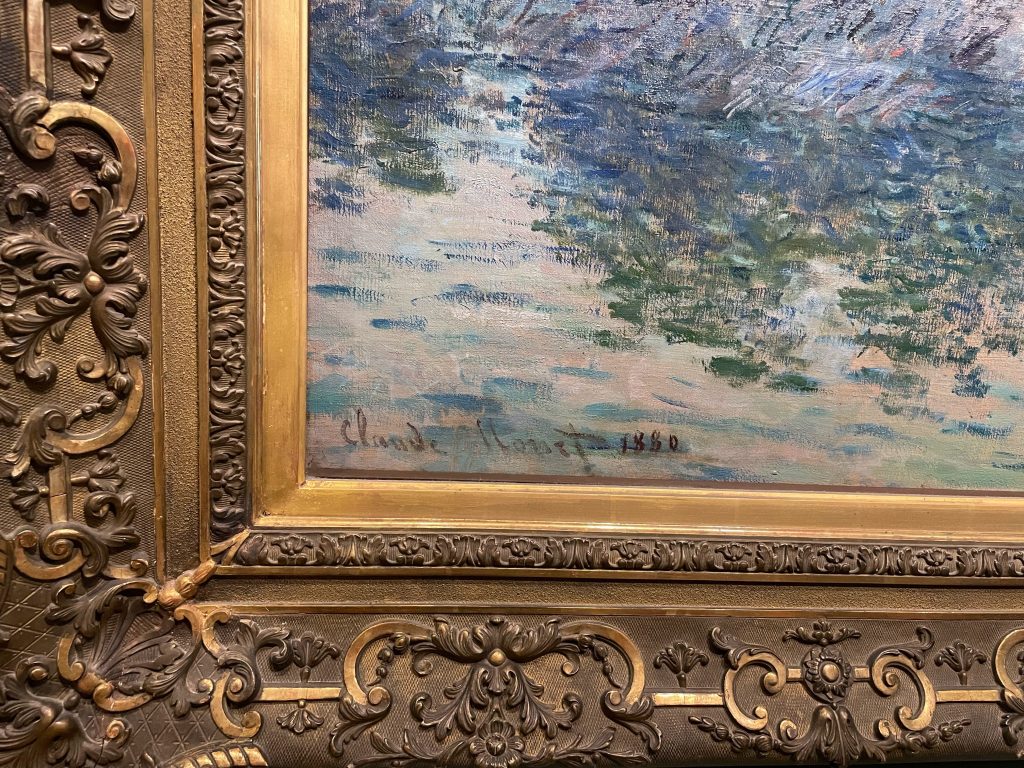
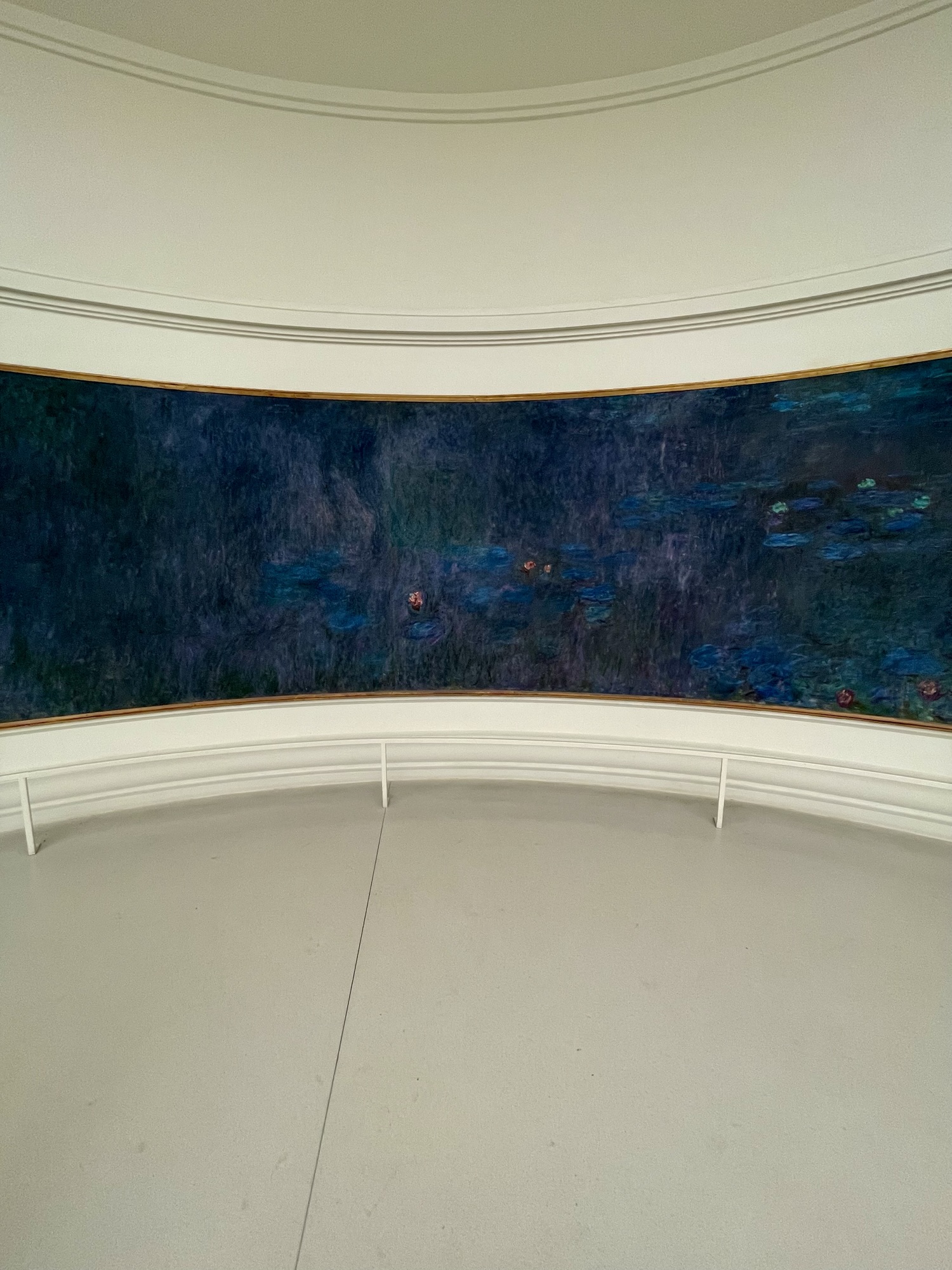
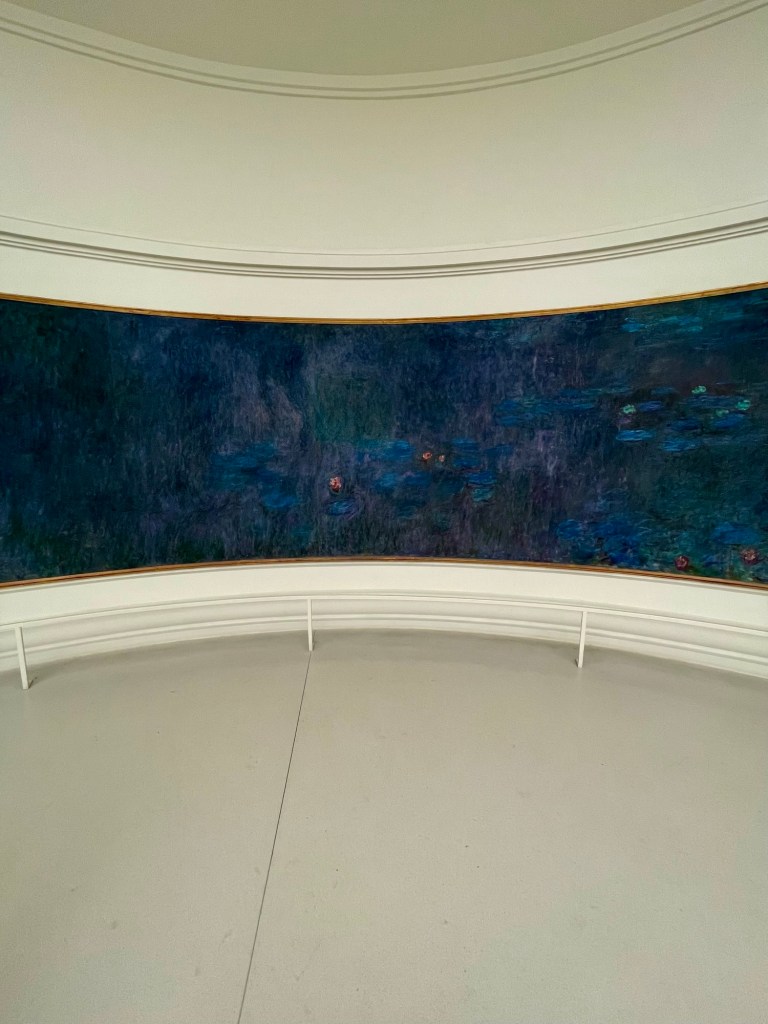
And if and when I do need an extra boost along the way, it will be those Paris memories that keep me going. The profound emotions I felt when I sat on the curved bench in the curved room and contemplated Monet’s waterlilies. Allowed myself to let go and immerse myself completely, the way the artist intended. The sense of calm and confidence that flooded me when, on my birthday, I stood in front of his Poppy Field at Argenteuil (the main inspiration for my novel) at the Musée d’Orsay. The overwhelming connection that came of seeking out his grave in Giverny and studying the multi-coloured flowers waving gently across the surface.
The practice of appreciating beauty, and creating it in turn, in everyday life. It’s a lesson that goes beyond Paris. It’s something we can work on everyday, wherever we are.
Hot Off The Press
A little bit of a brag, but I’m very, very proud of this accomplishment: three of my poems about growing up in a Portuguese immigrant home have been published in the latest issue of Gávea-Brown, vol. 51, no. 1.
Gávea- Brown: A Bilingual Journal of Portuguese-North American Letters and Studies is published by the Department of Portuguese and Brazilian Studies at Brown University. The journal was founded in 1980 as part of Gávea- Brown Publications, a publishing house dedicated to making Portuguese literature and culture better known in the English-speaking world. The journal’s mission is to publish works relating to the Portuguese experience in North America. The scope is broad, including editorially reviewed academic articles, documents, interviews, translations, book reviews, and creative works. In 2018, the Gávea- Brown journal, until then a leading journal published only in print, shifted to online publication in order to expand access to Portuguese-North American literature and studies.
You can access the current issue by visiting the Gávea-Brown page on the department’s website. You can also access the entire issue, as well as past issues, in the Gávea-Brown collection at the Brown Digital Repository.
Another Summer Evening
I clear my calendar every year for the Mexican Festival in Victoria since attending for the first time three years ago. Great food, music, people, and vibes. It’s going to be bigger and better than ever next year, so if there’s a chance you’ll be in the city next July, consider adding this event to your itinerary!
Co-Workers
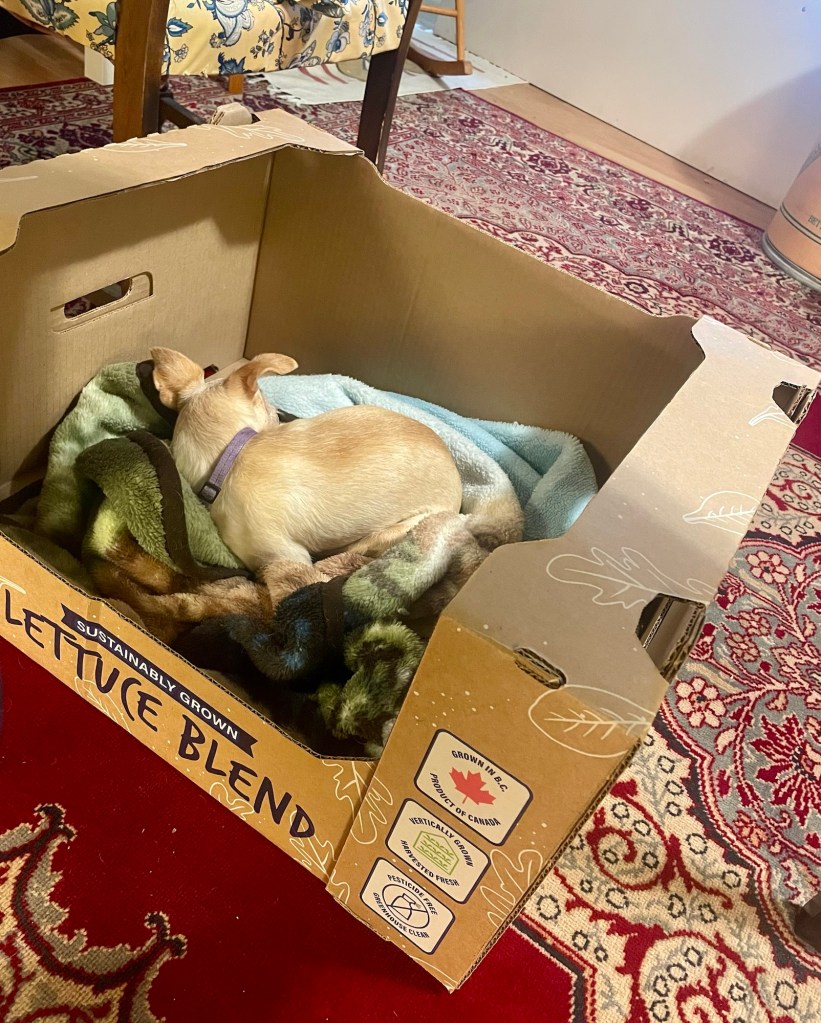
Best co-worker ever? 🐕
Because of a recent shift in my employment, I’m mainly working from home now! And I can’t tell you how much I love that my office mate follows me in every morning and curls up in her lettuce box. 🥬
(Feel free to share your pet photos in the comments!)
Taking Flight
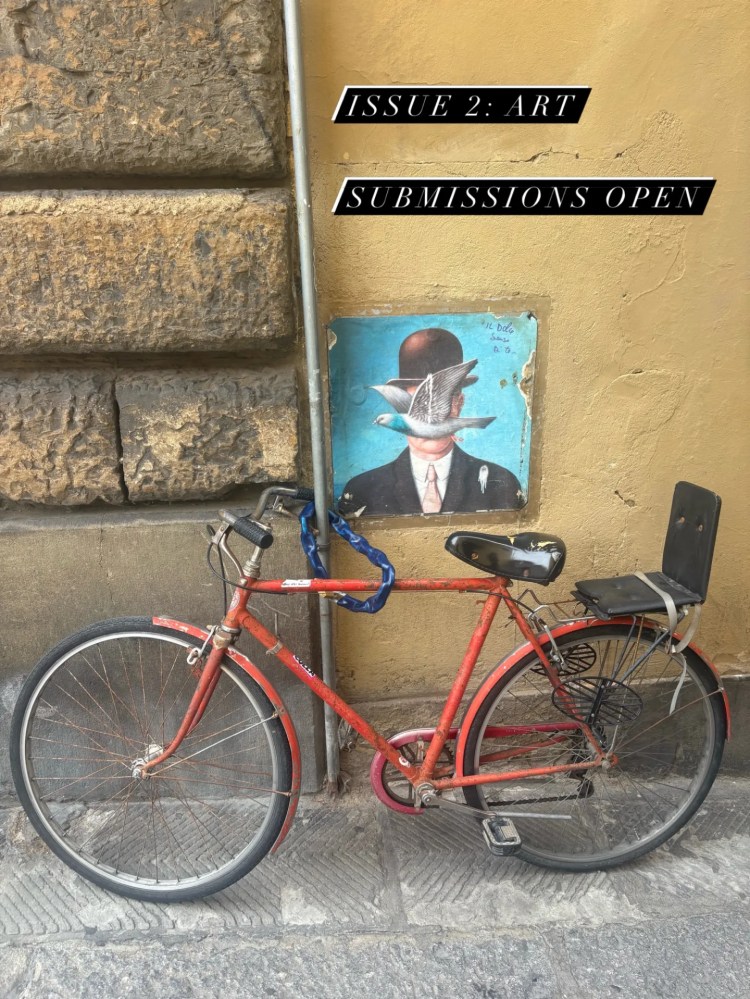
After a month-long hiatus, Andorinha Press is back! There are only five contributor spots left for Issue 2, so if you’d like your poetry, short fiction, or artwork considered, don’t wait to send it in. Find the detailed guidelines here. And you ever have any questions, reach out anytime — we’re friendly!
Submissions for Issue 2: Art are OPEN!
“Art is the lie that makes us realize truth” -Picasso.
This issue is a blank canvas for your big feels. About the people who love art, make art, and ARE art. About the places that have painted a picture in and of your life, and the spaces that display the resulting works. About light and colour that flit about, as elusive as the bird you’ve been trying to spot for years. We want pigments as varied as plumage.
Les Bouquinistes
In Montparnasse: The Emergence of Surrealism in Paris, from Duchamp to Dalí, by Sue Roe
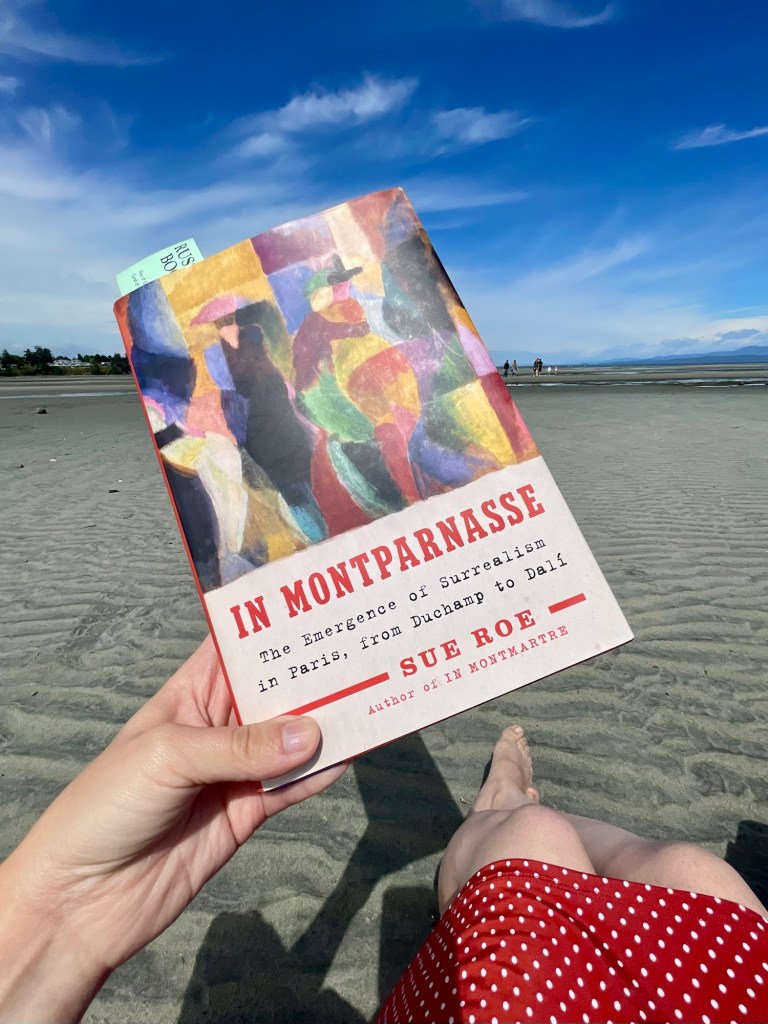
I had picked this one up from a shop some time ago, and now it’s my summer read. I just can’t seem to get enough of artists and writers from a particular era in Paris …
Here’s the blurb:
As she did for the Modernists In Montmartre, noted art historian and biographer Sue Roe now tells the story of the Surrealists in Montparnasse.
In Montparnasse begins on the eve of the First World War and ends with the 1936 unveiling of Dalí’s Lobster Telephone. As those extraordinary years unfolded, the Surrealists found ever more innovative ways of exploring the interior life, and asking new questions about how to define art. In Montparnasse recounts how this artistic revolution came to be amidst the salons and cafés of that vibrant neighborhood.
Sue Roe is both an incisive art critic of these pieces and a beguiling biographer with a fingertip feel for this compelling world. Beginning with Duchamp, Roe then takes us through the rise of the Dada movement, the birth of Surrealist photography with Man Ray, the creation of key works by Ernst, Cocteau, and others, through the arrival of Dalí. On canvas and in their readymades and other works these artists juxtaposed objects never before seen together to make the viewer marvel at the ordinary—and at the workings of the subconscious. We see both how this art came to be and how the artists of Montparnasse lived. Roe puts us with Gertrude Stein in her box seat at the opening of The Rite of Spring; with Duchamp as he installs his famous urinal; at a Cocteau theatrical with Picasso and Coco Chanel; with Breton at a session with Freud; and with Man Ray as he romances Kiki de Montparnasse.
Stein said it best when she noted that the Surrealists still saw in the common ways of the 19th century, but they complicated things with the bold new vision of the 20th. Their words mark an enormously important watershed in the history of art—and they forever changed the way we all see the world.
As always, thanks for reading. Merci!
Sonia